

Just Because Horses Can Use Force With Each Other Doesn’t Mean We Should

One of the most common justifications for harsh horse training methods sounds something like this:
“Horses are rough with each other, so using force, pressure, or punishment is natural.”
It’s a statement repeated so often that it’s begun to sound like fact. But when we look closely at how horses actually communicate within their own social systems, this belief starts to fall apart.
Yes, horses can use force.
No, that does not mean force is how they normally communicate — or how we should train them.
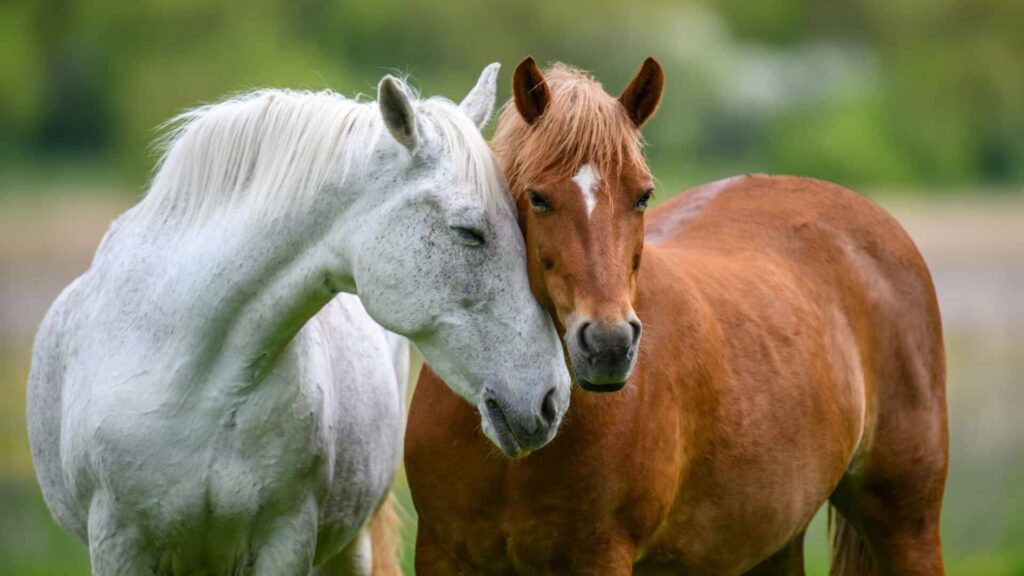
How Horses Really Communicate in a Herd
In stable, well-managed herds, the vast majority of horse communication is quiet, subtle, and preventative.
Horses use:
- shifts in weight and posture
- ear position
- eye focus
- tail movement
- stepping forward or stepping away
These signals are powerful precisely because they avoid escalation. Conflict is usually resolved before it ever becomes physical.
This is a crucial point that often gets missed: force is not the foundation of equine communication — it is the failure of it.
When Force Does Appear, Something Is Wrong
Physical aggression between horses is not a routine teaching tool. When it does occur, it is usually linked to:
- overcrowding
- limited access to food or space
- unstable or frequently changing herds
- stress, fear, or pain
In other words, force is a symptom, not a strategy.
In free-living and feral horse populations, serious resource guarding and violent escalation are rare. These horses live with space, stable social groups, and constant forage availability. What we often see in domestic settings is not “natural horse behaviour” — it is behaviour shaped by management history and past scarcity.
Copying Horse Aggression Is Not “Natural Horsemanship”
Even if a horse occasionally reacts with force toward another horse, this still does not justify humans using pain, punishment, or fear in training.
Why?
Because we are not horses.
We are a different species with:
- different biology
- different cognitive processing
- different moral responsibility
Horse behaviour is driven by instinct and survival.
Human behaviour is driven by choice.
Using the rare moments of horse aggression as justification for human-applied punishment is not ethology — it’s selective interpretation.
Fear Is Not a Training Tool
When a horse reacts strongly — biting, striking, guarding, freezing, or fleeing — it is not a lesson in dominance. It is information.
Fear-based responses tell us:
- the horse does not feel safe
- the environment is overwhelming
- past experiences are being triggered
Responding to fear with force does not create understanding. It creates compliance at best — and trauma at worst.
Training that relies on pain may stop a behaviour temporarily, but it does not address the reason the behaviour exists.
Subtle Communication Is Powerful Communication
The most effective horse trainers do not rely on punishment. They rely on:
- timing
- clarity
- consistency
- environment
- emotional regulation
Just like horses do with each other — before things escalate.
If force were truly the foundation of horse communication, herds would be chaotic. They are not. They are structured, calm, and remarkably efficient at maintaining social balance without violence.
We Know Better — So We Can Do Better
“Just because horses sometimes use force with each other doesn’t mean we should.”
That distinction matters.
As humans, we have the ability to choose training methods that:
- protect physical welfare
- respect emotional wellbeing
- build trust rather than fear
Understanding horse behaviour properly doesn’t excuse force.
It removes the need for it.
Final Thought
Violence is not the language of horses.
It is the breakdown of communication.
And as humans, we are responsible for choosing a better way.
If you’d like to explore this concept in practice, the Groundwork section of the Rider Guider App focuses on calm, subtle, force-free communication that mirrors how horses naturally learn best. The audio guides help you develop timing, feel, and clarity on the ground—supporting trust, emotional regulation, and understanding without the use of pain or intimidation. Ideal for building solid foundations that transfer into ridden work.